
The AAVSO blog features astronomical stories of particular interest to variable star aficionados. Blog posts might cover breaking news, historical anniversaries, internal project updates, and other subjects germane to our membership. Feedback is welcome: write to our organization's inbox to have your say!
 |
New User Profiles, Settings, and Search
These new applications should make it easier to manage your account and to connect with other AAVSO users.
|
 |
New Data Usage Guidelines
The latest revision offers an expanded scope and stronger recommendations for acknowledging observer contributions.
|
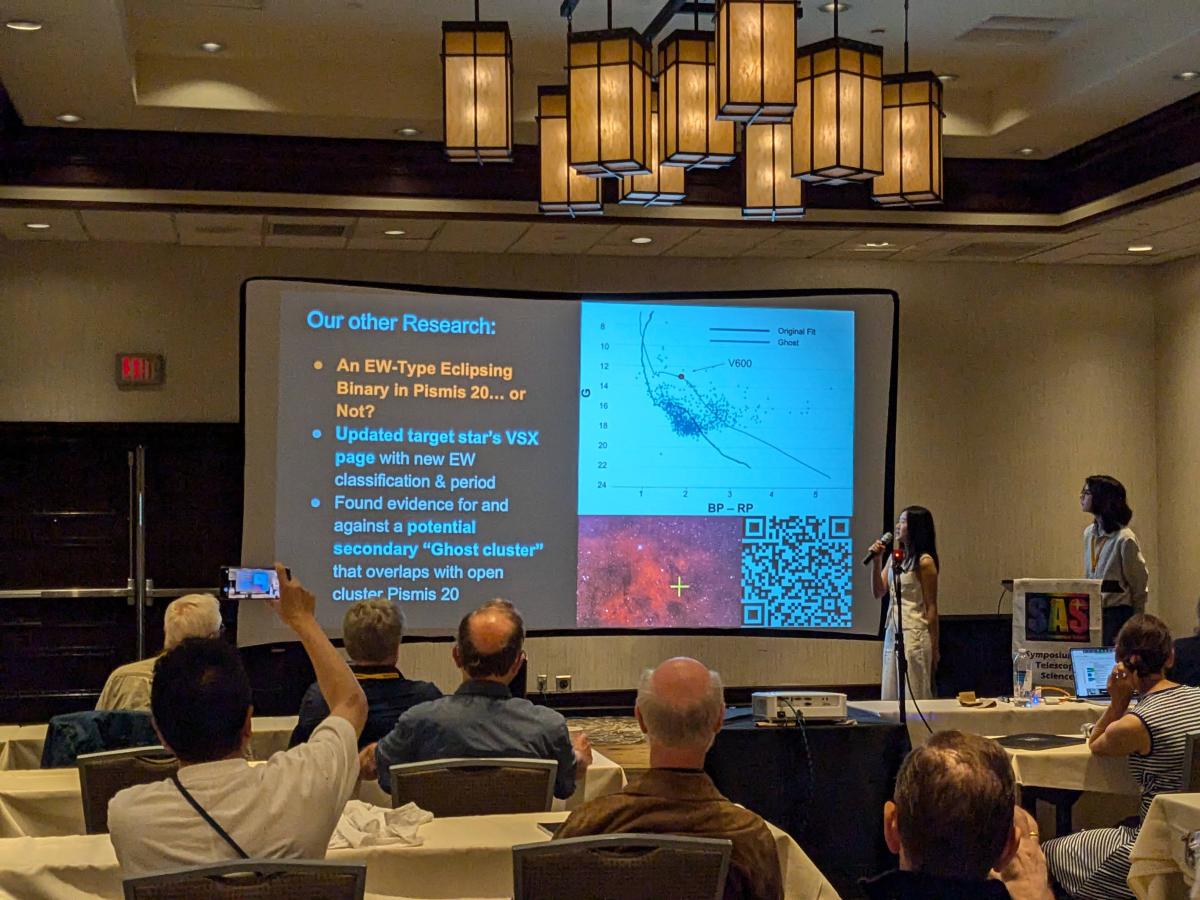 |
Director’s Report for 2025-Q2
This quarter has shown great progress on our strategic initiatives, several exciting scientific discoveries, and a busy schedule of events and outreach.
|
 |
An Invitation to Board Nominees
AAVSO’s Nominating Committee welcomes nominations and self-nominations for board members.
|
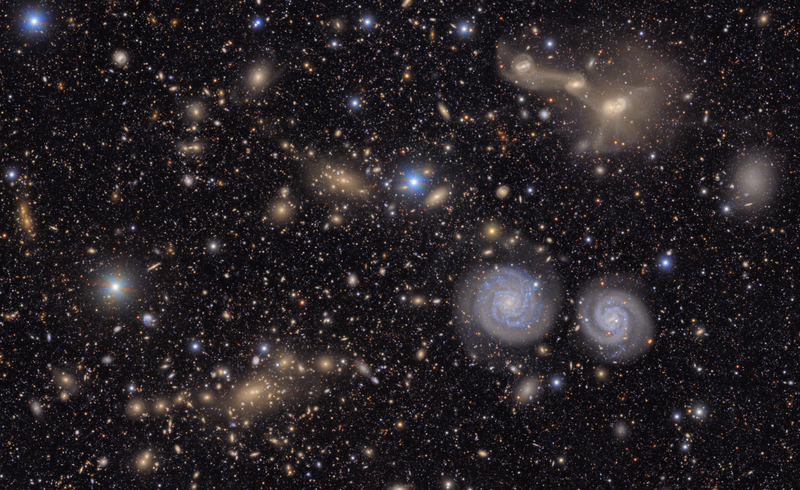 |
A Universe of Opportunity: The Future of Small Telescope Science in the LSST Era
Each time a major sky survey comes online, the inevitable question arises: “Is this the end of amateur astronomy?” As the examples above show, the Vera C. Rubin Observatory is no exception.
|
 |
WebObs 2.0: A New Photometric Data Submission Application
The upgraded platform introduces several improvements aimed at improving the quality of photometric observations.
|
 |
Changes on the Horizon
Coming soon: a brand new website that promises a cleaner user flow, improved applications, updated content and new ways to support the AAVAO.
|
 |
Director’s Report for 2025-Q1
An exciting update on this year's Annual Meeting, progress on our website relaunch, our strategic plan, financial overview, and more.
|
 |
They Might Be Hypergiants
AAVSO data has helped unveil the mysteries of Rho Cas and stars like it.
|
 |
New Data Search and Submit Applications
The AAVSO is working to develop a robust technology infrastructure to meet the evolving demands of modern astronomy. The latest updates bring us closer to that goal.
|
 |
Blazed and Confused
February 9 marked the 79th anniversary of T CrB’s most recent outburst in 1946. Earlier predictions have come and gone—will 2025 be the year the “Blaze Star” finally erupts?
|
 |
Director’s Report for 2024-Q4
A round-up of news around the organization, annual campaign results, 2024 and 2025 Annual Meetings, and progress toward strategic goals.
|
 |
The Tesla Roadster—Not an Asteroid
The misidentification of Elon Musk’s car as a minor planet highlights a bigger problem—how to protect humanity from near-Earth objects.
|
 |
Solar Section Looks Back to the Future
Recalibrating historical solar observations may lead to a greater understanding of the sunspot cycle.
|
 |
RW Cephei, a King of Kings
The physical processes behind a hypergiant’s “great dimming” may have been unlocked by high-resolution imagery and a century’s worth of AAVSO observations.
|
 |
Board Election Results
The 113th Annual Meeting saw the election of new leaders and the approval of updates to the organization's governing documents.
|
 |
Director’s Report for 2024-Q3
A T CrB update, new hire, and more news from the AAVSO.
|
 |
Ford Observatory Destroyed by Fire
The facility succumbed to the flames almost 60 years after its dedication.
|
 |
What to Do During the Eruption of T CrBSeptember 17, 2024 | By Brian Kloppenborg When the Blaze Star explodes, it will pay to be prepared. AAVSO is here to help.
|
 |
2024 Proposed Bylaw RevisionsSeptember 13, 2024 | By Brian Kloppenborg At this year’s Annual Member Meeting, a series of bylaw revisions will be on the ballot. The blog post will help you understand the motivation for these changes and what specifically was modified. |
 |
No, it didn’t erupt yet. How AAVSO is vetting T CrB dataSeptember 10, 2024 | By Brian Kloppenborg Over the past two years, AAVSO observers have submitted more than 200,000 observations of the Blaze Star. Before going public, any claim of an eruption must be carefully validated. |
 |
Stellafane: 88 Years . . . and CountingAugust 22, 2024 | By Tim Lyster The distinctive pink clubhouse marks its hundredth birthday, and amateur telescope makers continue to flock to the grandfather of astronomy conventions. |
 |
New Forums, Chat, and Sign in with GoogleAugust 21, 2024 | By Aru Bhoop The AAVSO announces a modern, faster, and easier-to-use forum system, and a feature allowing users to quickly sign in to their existing AAVSO accounts using their Google account. |
 |
Director’s Report for 2024-Q2August 14, 2024 | By Brian Kloppenborg Staffing updates, the Sun's eventful quarter, our Annual Meeting, and progress toward the organization's strategic goals. |
 |
StarGlass and a DASCH of DataJuly 23, 2024 | By Tim Lyster An ambitious project to digitize much of Harvard’s collection of more than half a million astronomical photographic glass plates has reached a significant milestone. |
 |
App and Infrastructure UpdatesJune 14, 2024 | By Aru Bhoop Over the past several months, the AAVSO has made significant infrastructure improvements. We are excited to roll these out to our users in the coming weeks. |
 |
The Latest from the SNEWS CampaignJune 13, 2024 | By Bert Pablo Six months from its launch date, this ambitious observing campaign’s goal—to monitor 200 bright supernovae progenitors—is moving closer to reality. |
 |
Sunshine and StormsJune 12, 2024 | By Tim Lyster One of the largest sunspot groups in recent history triggered the May 10 solar superstorm and aurora sightings worldwide. |
 |
The Jewel in the CrownMay 1, 2024 | By Tim Lyster It’s been 78 years since T Coronae Borealis’ last outburst. Astronomers are gearing up for the Blaze Star’s next show. |
 |
Director’s Report for 2024-Q1April 20, 2024 | By Brian Kloppenborg Results of the 2024 annual fundraising campaign, progress towards our strategic goals, and the 2023 Annual Report. |
 |
Sun, Meet MoonApril 5, 2024 | By Tim Lyster This month's total eclipse will be visible for millions of people. |
 |
Update on SNEWS CampaignMarch 21, 2024 | By Tim Lyster There are still stars to be claimed in this important citizen science project. |
 |
Director’s Report for 2023-Q4January 16, 2024 | By Brian Kloppenborg Highlights from the AAVSO’s 112th Annual Meeting, an announcement regarding our 2024 Strategic Plan, and several important decisions from the Board of Directors. |
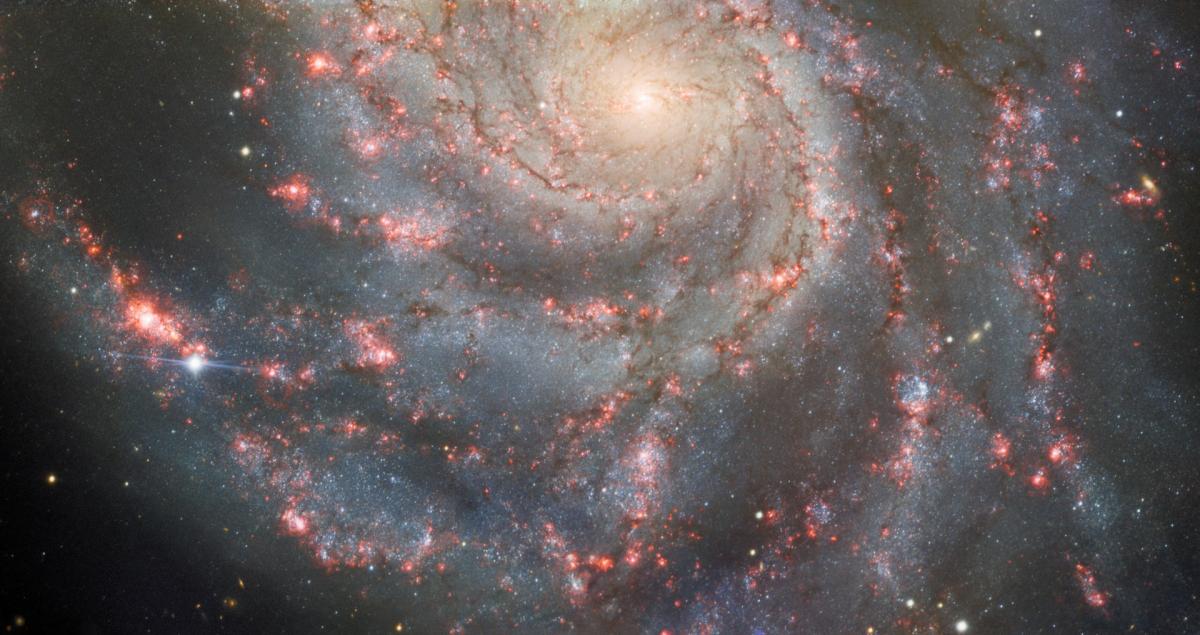 |
Star Light, Star BrightDecember 19, 2023 | By Tim Lyster & George Silvis How backyard observers can help unlock the secrets of supernovae. |
 |
Cleaning Up VSDNovember 16, 2023 | By Sebastián Otero & Tim Lyster Inconsistencies in the WBVR catalog magnitudes adopted in the Variable Star Database were causing issues for our observers. A major clean-up was in order. |
 |
Director’s Report for 2023-Q3October 12, 2023 | By Brian Kloppenborg In the third quarter, the staff are making the final preparations for the AAVSO’s 112th Annual Meeting, there's a new marketing hire, an audit of the organization's technical infrastructure, and the creation of a Strategic Plan Evaluation Working Group. |
 |
Shattering Shapley’s UniverseOctober 6, 2023 | By Tim Lyster A century ago, Edwin Hubble’s photographic observations of a Cepheid variable settled the vexing question of the day: Our Milky Way is not the entire universe. |
 |
Director’s Report for 2023-Q2August 1, 2023 | By Brian Kloppenborg Our executive director presents the results of our annual campaign, improvements to our technological infrastructure, two recent meetings that are helping define AAVSO’s scientific future, three science highlights, and a few events he attended. |
 |
Director’s Report for 2023-Q1May 2, 2023 | By Brian Kloppenborg In this inaugural post of his director's report, Brian reflects on Sara Beck's departure, the annual campaign, the Data Quality Taskforce, AAVSO in the Sky Survey Era, and a collaboration with CHARA. |