

Dear AAVSO Members, Observers, and Supporters,
The first half of 2026 has been an exceptionally busy and exciting time for the AAVSO. We’ve expanded AAVSOnet, launched new software, established a new special interest group, and transitioned to a fully remote organization.
Because of these activities, coupled with several staffing changes, I've combined my first and second quarter reports into a single update. This is going to be a longer post than usual, but there’s a great deal to share. As we continue to build our staff and expand volunteer involvement, I expect to return to my regular quarterly updates. With the forthcoming website launch, I also anticipate you'll begin seeing more news, community stories, and educational content on the AAVSO website.
If you'd like to help share the work of the AAVSO, I encourage you to consider volunteering with our Marketing, Education, or Public Outreach efforts. Please contact us to learn more about how you can get involved.
I hope you enjoy this update on the many exciting developments taking place at AAVSO.
Announcements
Annual Campaign Results
Although now several months behind us, I am pleased to report that our 2026 Annual Campaign raised a total of $103,545. While this fell short of our $140,000 goal, the result was consistent with broader national fundraising trends, which have seen charitable giving decline substantially during the past year.
I would like to sincerely thank everyone who contributed to this year's campaign. Your generosity continues to provide the financial foundation that allows the AAVSO to pursue new scientific opportunities while maintaining the programs our community depends upon.
AAVSO Goes Fully Remote
As you may have read in my 2026 Q1/Q2 Directors Report, the AAVSO Board of Directors approved the final steps in a transition that began in 2020 with the decision to sell the headquarters building at 49 Bay State Road. For those of you who may not be familiar with history, here’s a brief summary of how we arrived at this point.
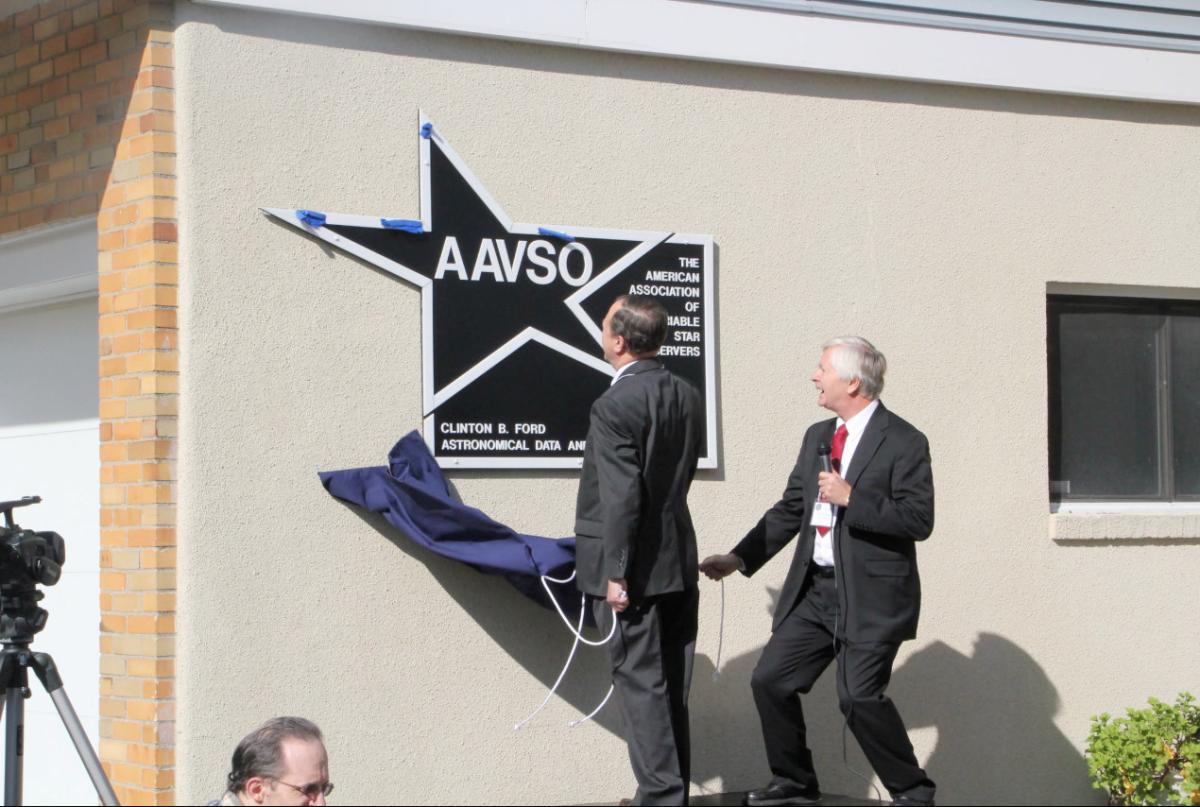
Following the decision, the AAVSO began the careful process of transitioning its physical assets to new homes. Between 2020 and 2022, the vast majority of our archives were transferred to the Harvard University Archives, our library was donated to the Astronomical Lyceum, and select artifacts were placed with other institutions where they can continue to benefit the astronomical community.
In June 2022, the AAVSO relocated to leased office space a few blocks away at 185 Alewife Brook Parkway. That office provided an important bridge as we transitioned to a fully digital organization. During May and June of this year, we effectively closed the office, and the AAVSO now operates as a fully remote organization.
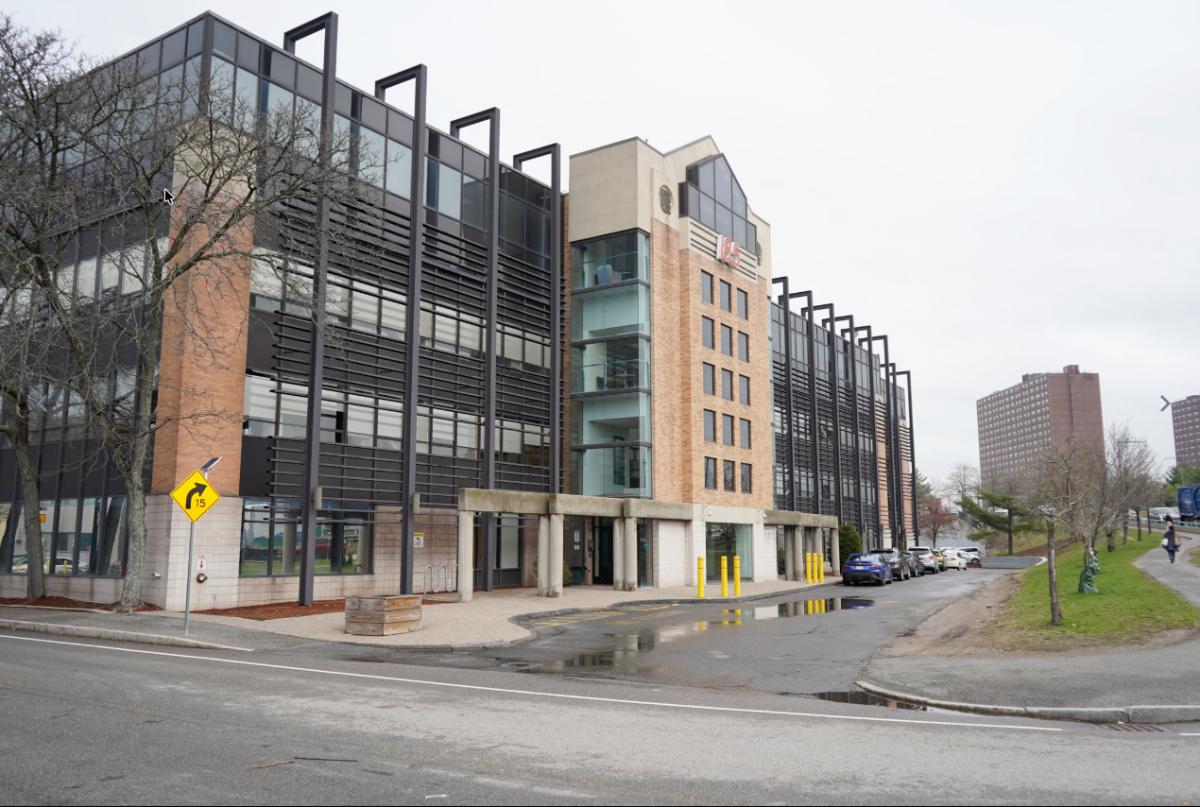
We will continue to maintain a mailing address in Cambridge which you can find on our Contact us page. Our telephone number and email address will remain unchanged.
Completing this transition will significantly reduce our operating costs. In fact, the savings generated by this change will allow us to hire an additional Staff Scientist later this year, increasing the resources we can devote to supporting our observers and advancing the AAVSO's scientific mission.
Scientific Programs
AAVSO Embraces Polarimetry
About a year ago, Gary Cole approached me with a simple question: should the AAVSO add polarimetry to its portfolio of observing programs?
To answer that question, we formed the Polarimetry Working Group to evaluate how the AAVSO could best support amateur polarimetry. After a year of careful study, the group presented its recommendations, which were subsequently reviewed by the Polarimetry Advisory Council. Based on those recommendations, I have decided to establish polarimetry as a new AAVSO observing discipline.
In the coming months, the Working Group will transition into an official Special Interest Group (SIG). The SIG will focus on developing observing standards, educational materials, coordinated observing campaigns, and a welcoming community for both new and experienced polarimetrists. While there's still work ahead, we're laying a solid foundation, and I expect the AAVSO's polarimetry program to be fully established within the next one to two years.
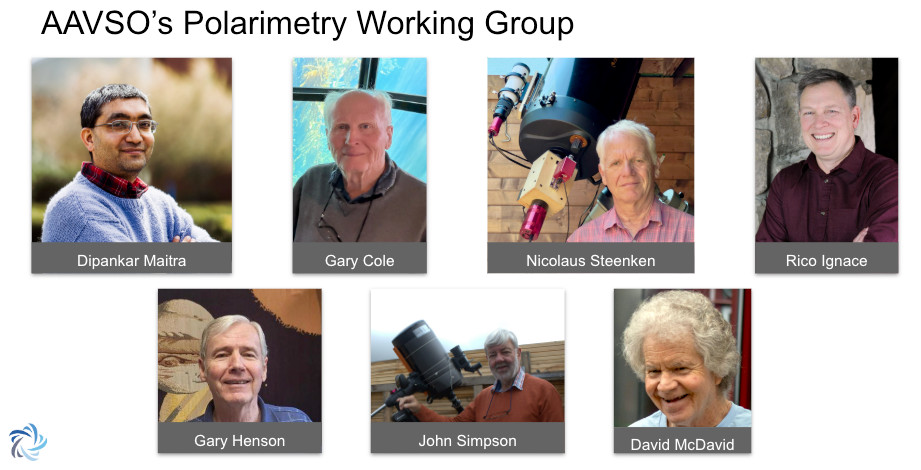
I would like to extend my sincere thanks to Dipankar Maitra, Gary Cole, Nicolaus Steenken, Rico Ignace, Gary Henson, John Simpson, and David McDavid for the tremendous amount of work they invested in this effort. Their recommendations provide a strong foundation for building a successful polarimetry program within the AAVSO.
I would also like to thank the members of the Polarimetry Advisory Council – Thomas Maccarone, Jean Perkins, Peter Craig, Walt Cooney, and Robert Stephens – for generously sharing their expertise and providing thoughtful guidance as we evaluated the Working Group's recommendations.
Expanding AAVSOnet Spectroscopy
Thanks to the generosity of our members, our recent fundraising campaign to add a dedicated spectroscopic instrument to AAVSOnet raised $7,300 in donations. AAVSO Board President Walt Cooney generously provided a 2-for-1 matching gift, contributing an additional $14,600 and bringing the total raised to $21,900.
Installation of the new instrument is now underway, with development of its robotic operation continuing in parallel. Once completed, it will significantly expand the spectroscopic capabilities available through AAVSOnet and provide new opportunities for both education and scientific research.
This project has been led by Walt Cooney and Scott Donnell, and I greatly appreciate the time and expertise they have devoted to making it a reality. I would also like to extend a special thank you to Michael Paoletti for hosting this instrument, along with several other recent additions to AAVSOnet. His continued generosity has been instrumental in expanding the network's scientific capabilities.
Technology
One of our core strategic initiatives for 2026 has been to improve our technical infrastructure. We are making excellent progress on several fronts.
New Solar Observing Application in Beta
The AAVSO's Solar SIG traces its origins to 1944, when it was established in response to the difficulty of obtaining official sunspot counts from Switzerland during World War II. Today, the AAVSO American Relative Sunspot Program produces an independent sunspot index used by solar researchers worldwide.
Much like AAVSO's other observing programs, solar observations were originally submitted on paper. Later, observers used the Java-based SunEntry application, which has served the Solar Section well but has become increasingly difficult to support on modern computers.
Our replacement for SunEntry has now entered beta testing. The new web-based application works seamlessly on desktop computers, tablets, and smartphones, providing a modern, user-friendly experience without the compatibility issues of legacy Java software.
Thank you to the members of the Solar Section who have been testing the application and providing valuable feedback. Their efforts will help ensure a smooth transition when the new application is released in late Q3 or early Q4.
New Website Coming Soon
As I've mentioned in several recent blog posts, we're preparing to launch a completely redesigned AAVSO website, currently targeted for mid-August. While you'll notice a refreshed look and improved navigation, the biggest changes have taken place behind the scenes. Here's a preview of what is to come:
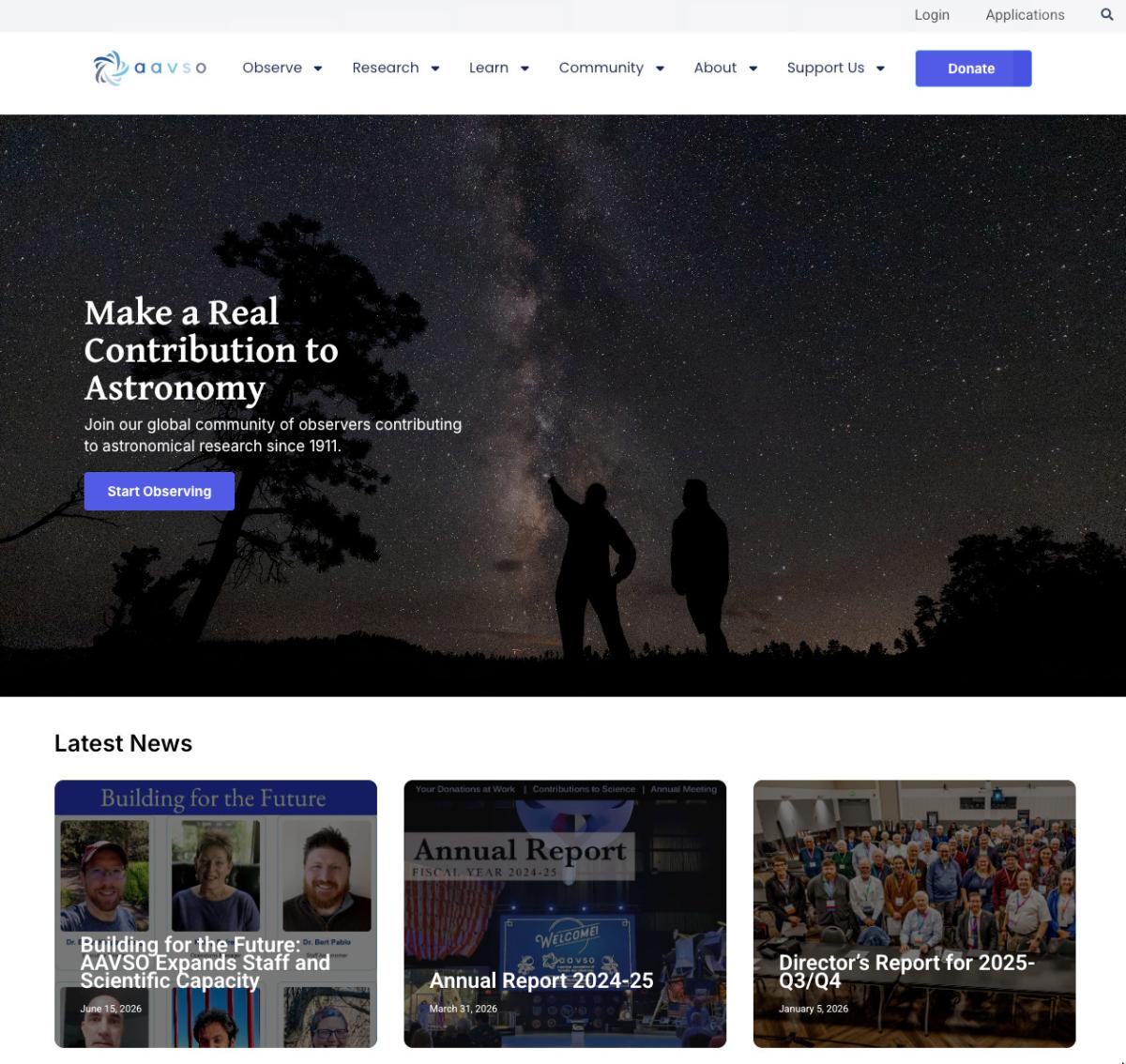
Over the past two years, we’ve separated our public website from our scientific applications, significantly improving the speed, reliability, and resilience of our online services. Hopefully many of you have already noticed the difference.
Rather than migrating all 60,000 pages from the current website, we're launching with approximately 50 of the most frequently used pages. The remaining content will remain available in our website archive, and additional pages will be migrated over time based on website analytics and member feedback.
Please note that the new website will also mark the retirement of the legacy WebObs 1.0 photometry submission system. If you haven't already done so, please transition to WebObs 2.0 for submitting your photometric observations.
We'll share more details as we approach the launch.
Smart Telescope Support Coming Soon
Since its formation in June 2024, the AAVSO Smart Telescope Working Group has been developing tools and standards to enable smart telescopes to contribute scientific-quality observations to the AAVSO. Along the way, the group reaffirmed that Bayer-array cameras can produce high-quality data; however, they also present a multitude of technical challenges at the few-percent level. Some of these findings were presented during the 2025 Society for Astronomical Sciences workshop on Science with Smart Telescopes.
Development continues to move forward. The group has developed a new data exchange format, has an application in alpha testing, and is in discussions with several smart telescope vendors about integrating its software into their products. A public beta release of the new app is anticipated in Q4.
To learn more, follow the group’s progress on the Smart Telescope Forum. The working group is also looking for additional software developers and beta testers. If you're interested in volunteering, please Contact Us.
Events and Outreach
CHARA Conference
In March, I attended the CHARA Conference and provided an update on the CHARA-AAVSO collaboration, which began in 2023.
Over the past year, AAVSO observers contributed data to four CHARA observing campaigns. Excluding the ongoing T CrB campaign, observers submitted approximately 3,600 photometric observations and 533 spectra. One particularly notable effort came from Ryan Norris of New Mexico Tech, whose project received more than 558,000 photometric observations and 596 spectra between January 2024 and December 2025.
The conference also highlighted the rapid progress of the Magdalena Ridge Observatory Interferometer, which has the potential to become another valuable scientific partner for the AAVSO.
Outreach Activities
In April, Molly Wakeling, Peter Craig, Scott Donnell, and I staffed the AAVSO booth at NEAF, while Arne Henden and I presented at NEAIC. Together, we spoke with several hundred attendees about AAVSO observing programs and scientific opportunities.
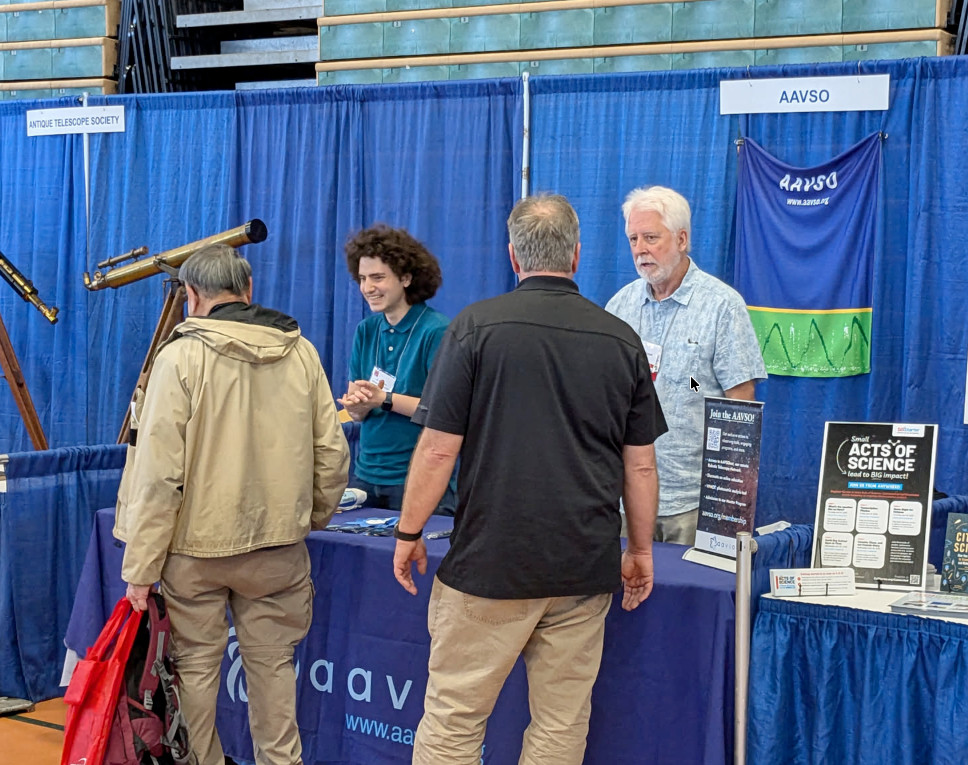
In May, Bert presented at Iowa State University and the Ames Area Astronomical Society, resulting in two potential observing campaigns and interest in incorporating AAVSO resources into university coursework.
In June, Gary Cole organized a polarimetry workshop at the Society for Astronomical Sciences Symposium, where members of the Polarimetry Working Group presented to a highly engaged audience, reflecting the growing interest in amateur polarimetry.
Staff Updates
In June, we welcomed Joanna DiStefano as our first Volunteer Coordinator. Joanna has already begun meeting with many of our volunteers and is working closely with our mentors and Special Interest Group leaders to strengthen volunteer engagement and build an even more vibrant community.
From the Board of Directors
The Board of Directors continued its strategic planning efforts throughout the first half of the year, holding several planning sessions and meeting jointly with staff to help guide the organization's long-term priorities.
These discussions are helping ensure that the AAVSO remains well positioned to support the next generation of observers, expand scientific opportunities, and strengthen the organization for years to come.
Closing thoughts
Thank you, as always, for your continued support of the AAVSO. Together we are building an organization that is better equipped than ever to enable amateur astronomers to make meaningful contributions to astronomical research.
Clear skies,
Dr. Brian Kloppenborg
Executive Director, AAVSO